If you have ever walked down the vitamin aisle or looked up women's health supplements, you have undoubtedly run into folic acid (also known as Vitamin B9). And if you are like most people, you probably associated it instantly with prenatal vitamins, pregnancy, and preventing birth defects.
For decades, folic acid has been heavily marketed as the "baby vitamin."
But what if you aren’t trying to conceive? Does your body still need it?
As it turns out, absolutely. A peer-reviewed study published in the scientific journal PLoS ONE revealed that folic acid plays a massive, under appreciated role in everyday menstrual health, hormone balance, and your monthly cycle.
Here is what the science says about why this vitamin:
In the PLoS ONE study, researchers tracked 259 healthy women and checked their hormone levels throughout their cycles.
The results were clear: Women with the highest intake of folic acid had a 64% lower risk of skipping ovulation.
By supporting the ovaries at a cellular level, folic acid ensures your body successfully releases an egg. Because of this regular ovulation, the women in the study also maintained healthier, higher levels of progesterone.
How to get the benefits:
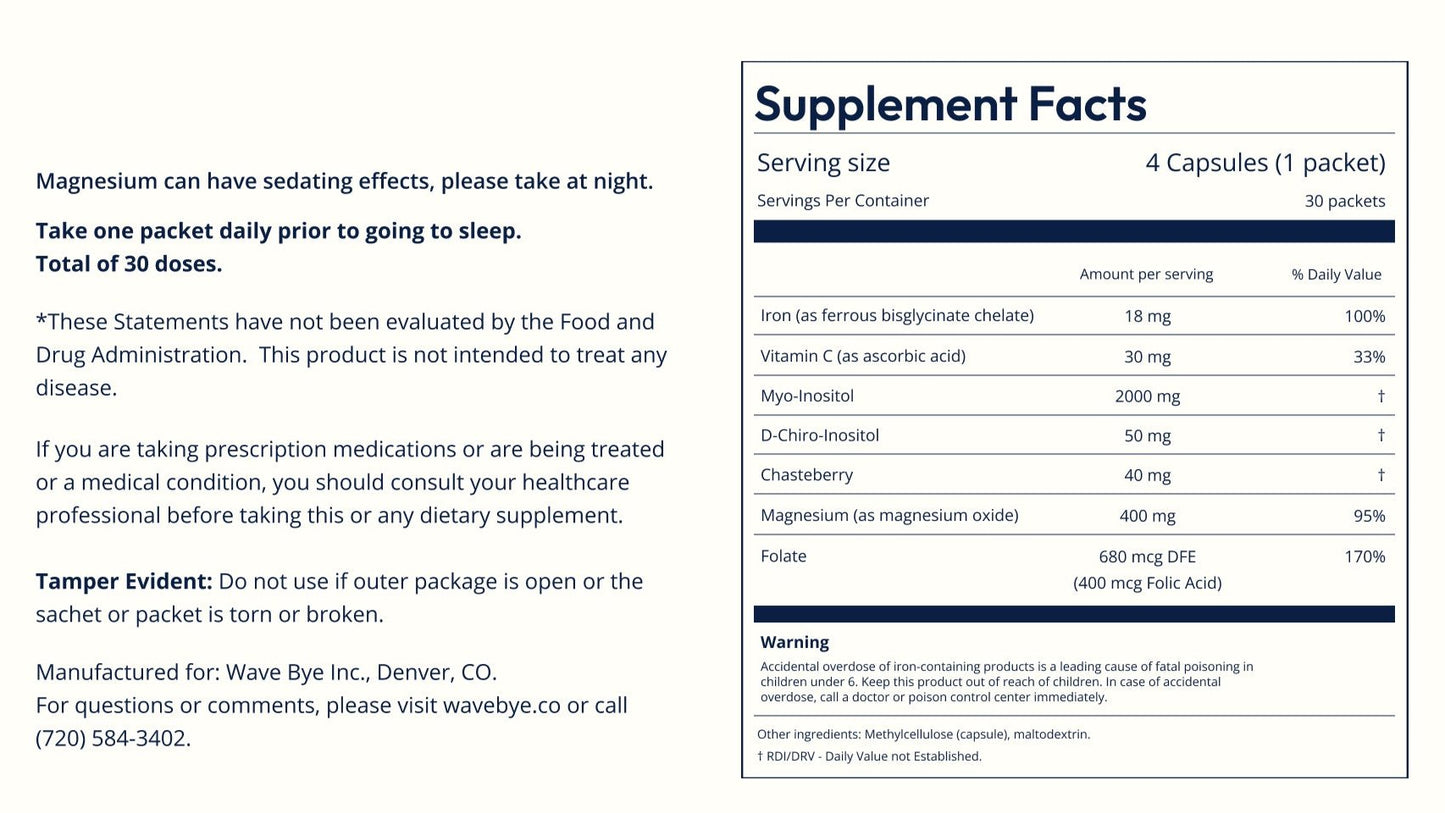
To keep your cycle on track, aim for the standard recommendation of 400 to 800 micrograms (µg) of folic acid per day. While you can find natural folate in leafy greens, lentils, and citrus, the study found the strongest cycle-stabilizing benefits came from supplemental folic acid.
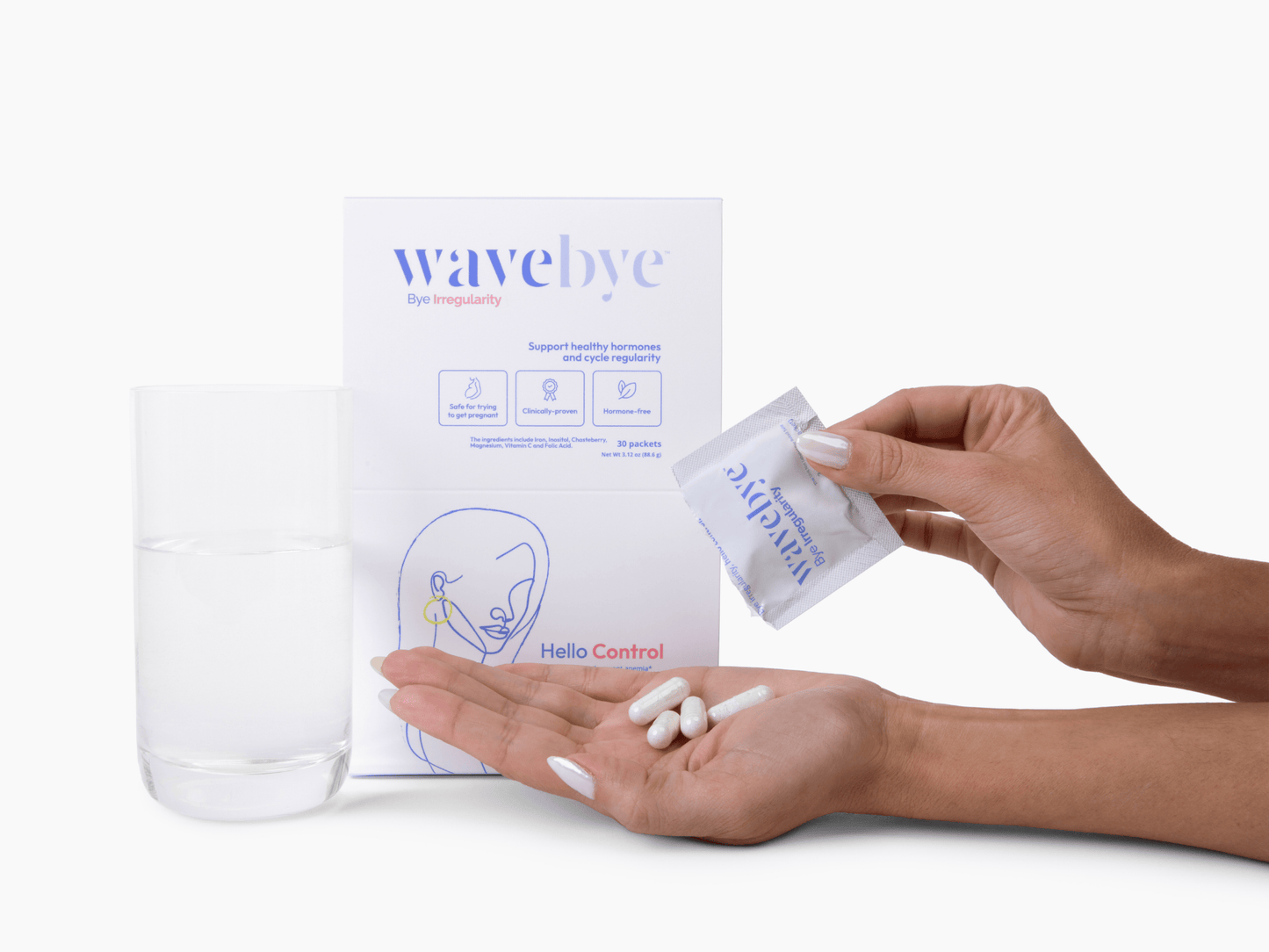
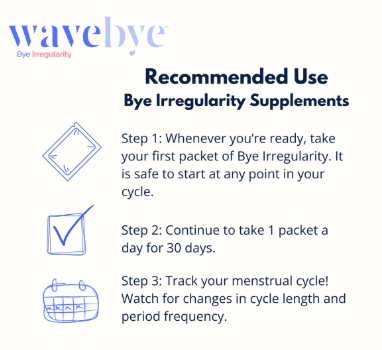
If you’re looking for an easy way to get more folic acid, try out Wave Bye’s nightly supplement below!