Most people with PCOS have heard of metformin. Far fewer have heard of inositol, a compound that has been getting increasing attention in research surrounding menstrual cycles and women’s health.
PCOS affects millions of women worldwide, and one of its most common underlying drivers is insulin resistance. When the body struggles to regulate insulin effectively, it can disrupt hormonal balance, ovulation, and menstrual cycle regularity. Because of this connection, researchers have been exploring ingredients that may help support insulin sensitivity and metabolic health.
One ingredient that has emerged in this conversation is inositol.
What the Research Says
A 2023 systematic review and meta-analysis looked at 26 clinical trials involving 1,691 women with PCOS to better understand how inositol compares to commonly used treatments.
Women taking inositol were nearly twice as likely to experience a regular menstrual cycle compared to placebo. The analysis also found that inositol performed on par to metformin, but without the gastrointestinal side effects that many people report when taking metformin.
Researchers also observed improvements in several metabolic markers among those taking inositol, including blood sugar levels, insulin levels, and testosterone markers. These changes are particularly relevant in PCOS, where insulin resistance can influence hormonal signaling and ovulation patterns.
Why Insulin Resistance Matters in PCOS
Insulin resistance plays a key role in many cases of PCOS. When insulin levels stay elevated, the body may produce more androgens (sometimes called “male hormones”), which can disrupt ovulation and lead to irregular cycles.
Because of this connection, ingredients that help support insulin sensitivity have become an area of interest in PCOS research. Inositol is thought to act as an insulin-sensitizing compound, helping improve how the body processes glucose and communicates hormonal signals.
Where Inositol Fits Into Cycle Support
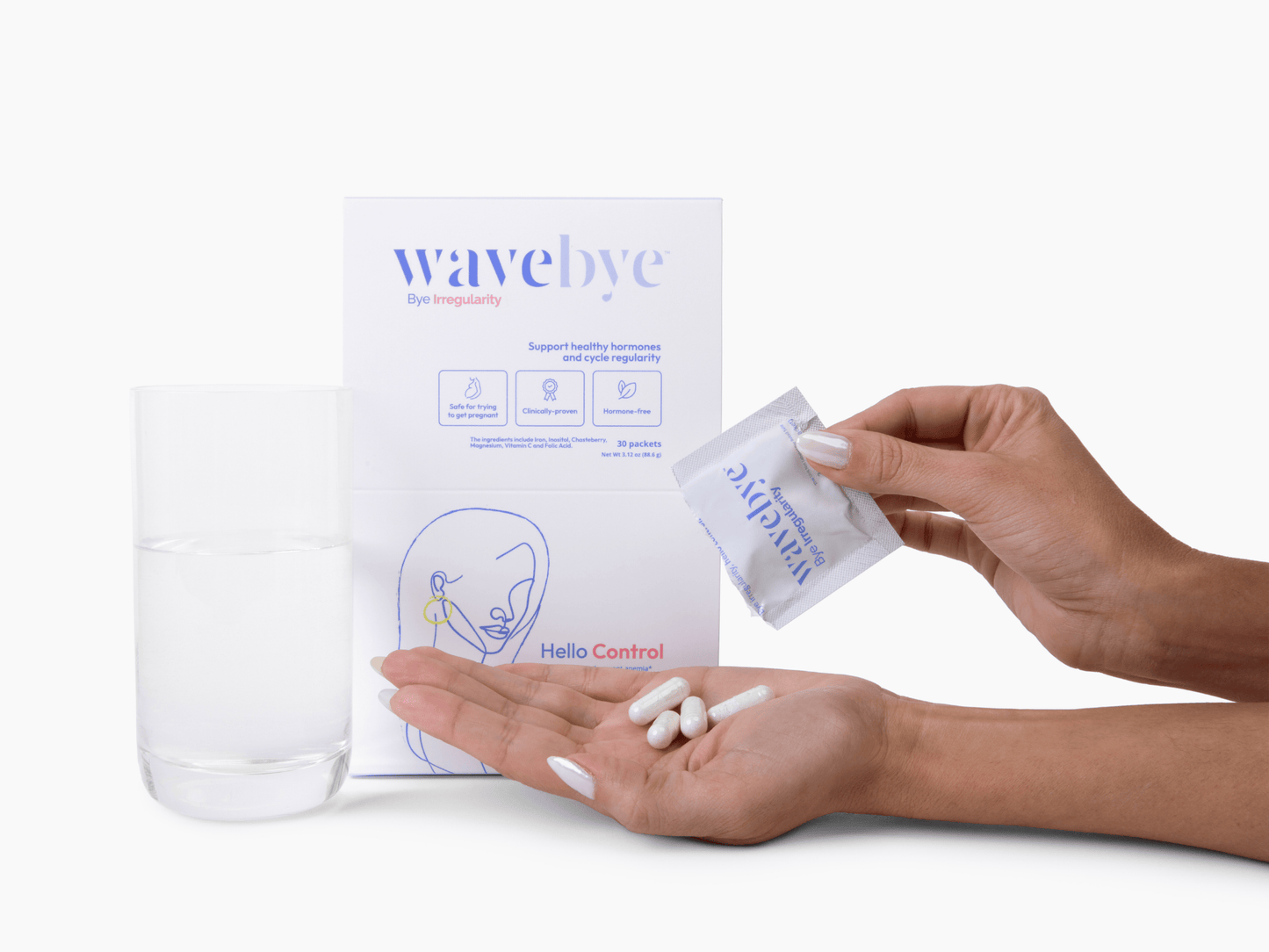
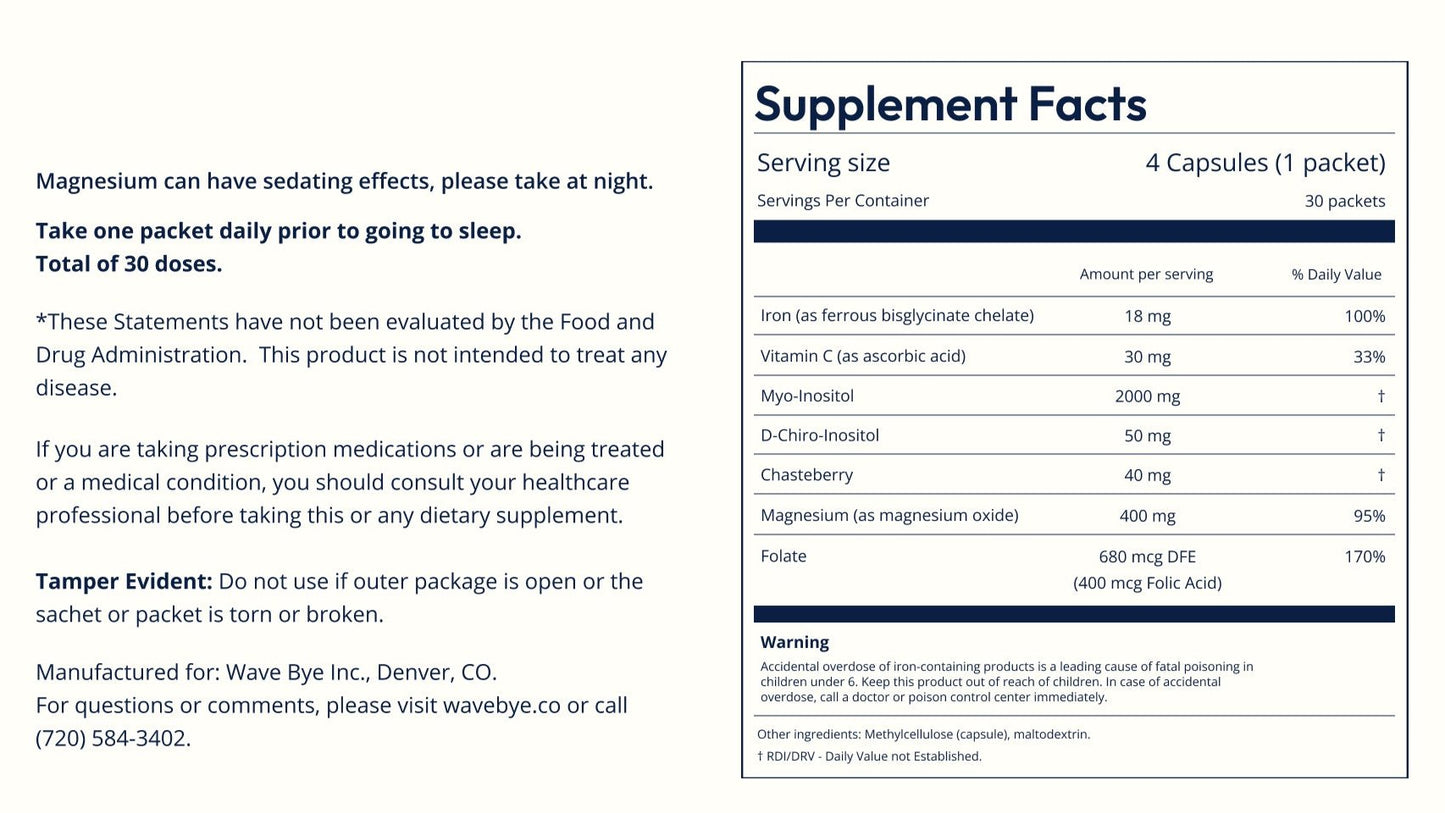
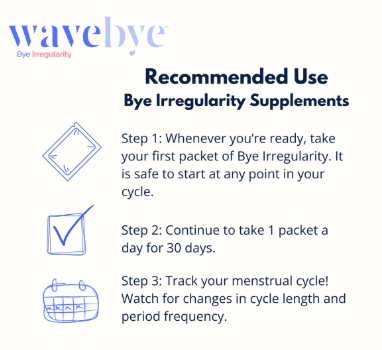
At Wave Bye, inositol is one of the ingredients included in Bye Irregularity because of its potential role in supporting cycle predictability.
Menstrual health rarely comes down to a single factor. Hormones, metabolism, stress, sleep, and nutrition all affect your cycle. That’s why many people managing PCOS end up exploring multiple strategies to better understand and support their cycles.
As research continues to evolve, ingredients like inositol are becoming part of a broader conversation about giving women more options when it comes to cycle health.
-> Learn about Bye Irregularity
-> View the full study here